Chimney repair and rebuilding in Moncton
A chimney is the most exposed masonry on a house. It takes rain and wind from every side, freezes and thaws all winter, and with a wood stove or fireplace it also takes heat and moisture from inside. We repair crowns, joints, brick and flashing, and rebuild chimneys that have gone too far.
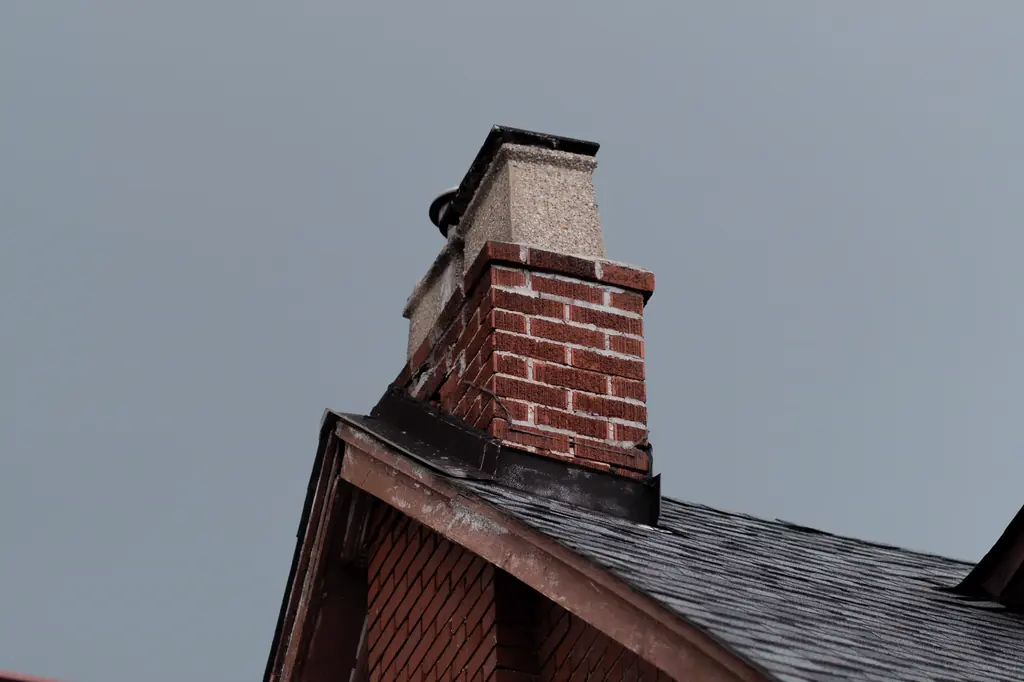
This page covers the masonry of the chimney: the crown, brick, mortar joints and flashing. The flue and the appliance connected to it are checked by a WETT inspector (see below). For brick problems lower on the house, see brick repair.
The parts of a chimney that fail
- Crown
- The concrete or mortar slab on top of the chimney that sheds water away from the brick. Many crowns are just a thin layer of mortar sloped by hand, and they crack within a few winters. Once cracked, water runs straight down into the chimney.
- Cap
- The metal cover over the flue opening that keeps rain, snow and animals out. A missing cap lets water straight into the flue and liner.
- Mortar joints
- Chimney joints wear faster than any other on the house because the chimney is exposed on all four sides.
- Brick
- Brick near the top of the chimney takes the most water and the most freeze–thaw, and is often the first to spall.
- Flashing
- The metal where the chimney meets the roof. Failed flashing is the most common cause of a leak at the ceiling beside a chimney, and is often mistaken for a roof leak.
- Flue liner
- The clay tile or stainless steel liner inside the chimney that contains smoke and gases. Liner condition is checked during a chimney inspection.
Signs your chimney needs repair
- Water stains on the ceiling or wall next to the chimney, or water in the firebox
- Pieces of brick, mortar or crown on the roof, in the gutters or on the ground
- Cracks across the top of the crown
- Brick faces flaking or crumbling, usually worst near the top
- White staining (efflorescence) on the outside of the chimney
- A chimney that leans or is visibly out of plumb
- Gaps between the chimney and the roof flashing
- Rust on the cap, damper or firebox, a sign of water coming down the flue
A chimney that leans, has loose bricks at the top or drops debris should be looked at soon. Chimneys that fall usually go in a winter storm, and they can come through the roof or land where people walk.
Chimney repairs we do
Crown repair and replacement
Hairline cracks in an otherwise sound crown can be cleaned out and sealed with a crown repair product. A crown that is broken up, too thin or flat is better replaced. A proper crown is cast in concrete, slopes away from the flue, overhangs the brick with a drip edge so water falls clear of the face, and has a gap around the flue liner so the liner can expand with heat without cracking the crown.
Repointing
Worn chimney joints are raked out and repointed, often from the roofline up. Because chimneys are so exposed, joint wear is often the first repair they need.
Brick replacement and partial rebuild
Spalled bricks are replaced. When the damage is concentrated at the top, which is common, the chimney is taken down to sound brick and rebuilt from there with a new crown.
Full rebuild above the roofline
When most of the brick above the roof is damaged, or the chimney leans, the best value is often to take it down to the roofline and rebuild it with new brick, new flashing and a new crown.
Flashing
Step and counter flashing is replaced or resealed, with the counter flashing set into a cut in the mortar joint, not just glued or caulked to the face of the brick.
Unused chimneys
If a chimney is no longer used, it can be capped and vented, or taken down below the roofline and the roof closed in. That removes a maintenance item for good.
Chimney leaking or dropping bricks? Call and we’ll book a look before it gets worse.
Call (506) 406-6730Send detailsChimney masonry and WETT inspections
Masonry repair and chimney safety inspection are related but different jobs. A WETT-certified inspector (Wood Energy Technology Transfer, the Canadian program for wood-burning safety) checks the flue, liner, clearances and appliance. Many insurers in New Brunswick ask for a WETT inspection on homes with wood stoves or fireplaces. If the inspector notes masonry problems, such as a cracked crown, missing brick or failed joints, that’s the work we do. If your chimney hasn’t been inspected in a while, we can point you to booking one before or after repairs.
Chimneys in Moncton, Dieppe, Riverview and Shediac
Brick chimneys are mostly found on older houses here. Newer homes in Dieppe and Riverview often have no masonry chimney at all, or a framed chase with a metal flue inside. Many older Moncton homes have switched from oil or wood heat to heat pumps, which leaves a chimney that is no longer used. An unused chimney never warms up, so it stays damp and the freeze–thaw damage can speed up. If yours isn’t being used, it may be worth capping it or taking it down below the roofline rather than repairing it.
Cottages and older homes around Shediac, Pointe-du-Chêne and Cap-Pelé take wind and salt air off the Northumberland Strait, and their chimneys are often the first masonry to go. Seasonal places are also easy to overlook, because nobody is there in spring to notice the stain on the ceiling.
What affects the cost
- Roof pitch and height: a steep roof or a tall chimney needs more safety setup and staging
- Extent of damage: crown only, top few courses, or the whole stack above the roofline
- Number of flues and the chimney’s size
- Flashing: resealing versus full replacement
- Brick matching for partial rebuilds
- Season: work below about 4 °C needs heated enclosures or covers to protect new mortar
Chimney repair questions
Is my leak from the chimney or the roof?
A leak right beside the chimney is very often the flashing or the crown, not the shingles. Water can also soak down through porous brick and joints. We check the crown, cap, brick and flashing to find the actual entry point.
Can chimney work be done in winter?
Emergency work, such as taking down loose bricks or covering a broken crown, can be done any time. Mortar work is different: new mortar must not freeze in its first day or two, and a chimney top is the coldest, windiest spot on the house. Below about 4 °C it needs protection, so major repointing and rebuilds are best done between late spring and fall.
Do I need a permit to rebuild a chimney?
It depends on the scope and the municipality. A like-for-like rebuild above the roof may be treated differently from a new chimney or work connected to a heating appliance. Rules differ between Moncton, Dieppe, Riverview and rural areas, so we check what applies before starting.
Should I waterproof my chimney?
A breathable masonry water repellent can help on a chimney in good condition after repairs are done. It isn’t a fix for cracks, failed joints or a bad crown, and non-breathable sealers can make spalling worse.
Got a masonry problem? Let’s take a look.
Call to describe the job, or send the form and we’ll call you back. Quotes are free and in writing.
(506) 406-6730- Free on-site look and a written quote
- We explain the cause, not just the symptom
- Moncton, Dieppe, Riverview, Shediac and area