Brick repair and replacement in Moncton
When bricks crack, flake or work loose, the damaged ones can usually be cut out and replaced without rebuilding the whole wall. The important part is finding out why they failed, so the new bricks don’t go the same way in a few winters.
This page is about the bricks themselves: cracked, spalling, loose or bulging. If the bricks are sound and it’s the mortar between them that’s wearing away, see brick repointing. For brick above the roofline, see chimney repair.
What brick repair involves
Brick repair covers anything from replacing a handful of damaged bricks to taking down and relaying a section of wall. On most houses around Moncton the brick is a veneer: a single layer, or wythe, tied back to a wood or block wall behind it with metal ties, with an air space between. On older buildings near downtown and in the older parts of Moncton, the brick is often solid masonry two or three wythes thick that carries the weight of the building. The repair method depends on which one you have.
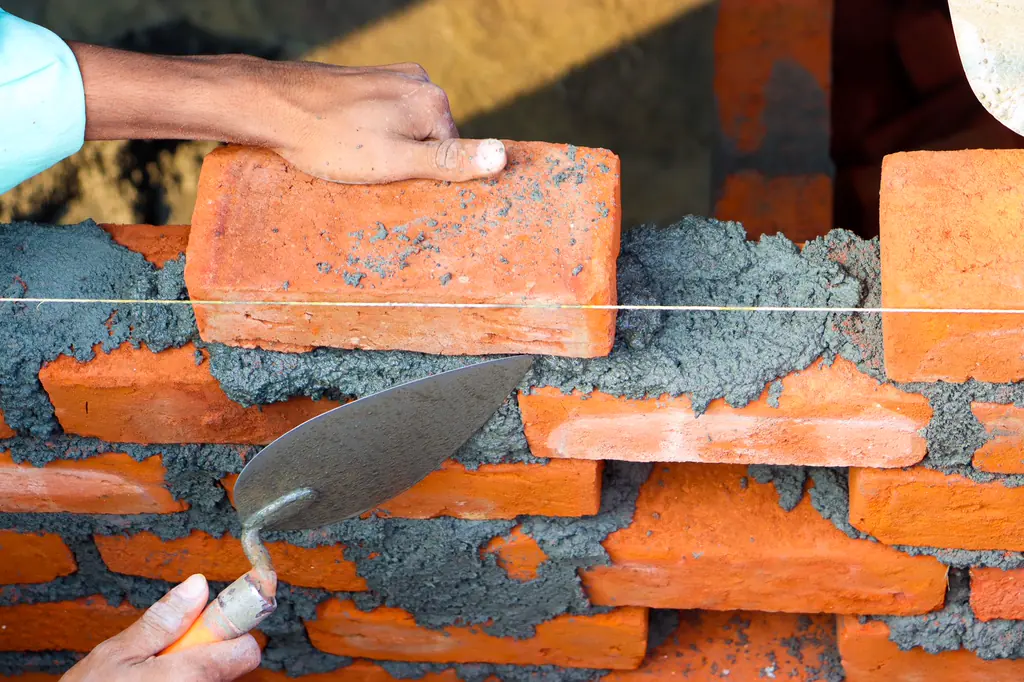
A typical replacement goes like this: the mortar around the damaged brick is cut out, the brick is broken out without disturbing its neighbours, the cavity is cleaned, and a matching brick is set in fresh mortar. The joints are then tooled to match the rest of the wall. For larger areas, the section is taken down to sound brick and rebuilt, with new ties where the old ones have rusted.
Why bricks fail in New Brunswick
Brick is fired clay, and it’s porous. It takes on water from rain, snow piled against the wall and splashback from gutters and downspouts. When that water freezes it expands by about 9%, and over enough freeze–thaw cycles it breaks the brick from the inside. Around Moncton the temperature crosses zero many times each winter, which makes freeze–thaw the main cause of brick damage here.
Other common causes we look for:
- Hard repointing on soft brick. (See why mortar choice matters.) If an earlier repair used a strong cement-rich mortar, the joint no longer gives. Moisture and movement are forced through the brick instead, and the faces pop off next to the joints.
- Water from above. Missing or failed flashing, an overflowing gutter, a cracked window sill or a chimney without a proper crown can soak one part of a wall far more than the rest.
- Sealers that trap moisture. Some clear sealers stop water vapour from leaving the brick. The water stays in, freezes and spalls the face behind the sealer.
- Rusting steel. Steel lintels over windows and doors expand as they rust and crack the brick above them.
- Settlement. Movement in the foundation shows up as stair-step cracks through the brick and mortar.
- Salt. De-icing salt splashed onto low courses and steps, and salt air near the coast, speeds up spalling and crumbling.
Signs a brick wall needs repair
- Spalling: the outer face of the brick is flaking, peeling or has broken off
- Bricks that are cracked straight through, or that move when you push them
- Stair-step cracking through joints, or cracks that open and close with the seasons
- Bulging or leaning sections of wall
- Cracking over windows and doors, often with rust staining
- White efflorescence that keeps coming back in the same spot, a sign of steady water
- Damp patches or peeling paint on the inside of an exterior wall
A wall that bulges or moves when pushed has lost its connection to the structure behind it. Keep people away from under it and call before it gets worse. That is a priority repair, not one to leave for spring.
Repair approaches
- Spot replacement
- Individual damaged bricks are cut out and replaced. Best when damage is scattered and the rest of the wall is sound.
- Section rebuild
- An area is taken down to sound brick and rebuilt. Used for bulging sections, failed ties, or damage concentrated in one place, such as under a leaking sill.
- Lintel replacement
- Brick over a window or door is removed, the rusted steel lintel is replaced or cleaned and coated, flashing is added, and the brick is relaid.
- Crack repair
- Cracks through mortar joints are cut out and repointed. Cracks through the brick itself usually mean those bricks need replacing. If the crack is from settlement, the cause gets checked first.
- Tie repair
- On brick veneer, rusted or missing ties can be supplemented with retrofit ties installed through the joints, without taking the wall down.
Got a few bad bricks or a cracked section? Send a photo and we can usually tell you what kind of repair it needs.
Call (506) 406-6730Send detailsMatching brick and mortar
A repair should be hard to spot. That means matching the brick in size, colour and texture, and matching the mortar in colour, joint profile and strength.
Brick. Modern brick is made in metric and imperial sizes, and older brick often differs from both. We look for a close match from current production first. For older homes, salvaged brick is often the best option. Sometimes the cleanest approach is to take good bricks from a less visible part of the house and use new brick in that spot instead.
Mortar. The rule masons follow is that mortar should be weaker and more porous than the brick it holds. Mortar is meant to be the sacrificial part of the wall: cheaper and easier to replace than brick. Modern veneer is usually laid in a Type N or Type S mortar. Older, softer brick generally needs a lime-rich mix. In Canada, mortar types are set out in CSA A179, the standard for mortar used in masonry.
Colour. New mortar starts darker or lighter than the weathered joints around it. We tint and test it to get close, and it will continue to blend in as it weathers.
Brick damage around Greater Moncton
The pattern of damage depends a lot on the age of the house. Older brick homes and commercial buildings in and around downtown Moncton often have soft brick laid in lime mortar, and many have been patched over the years with hard cement mortar. That is where we see brick faces breaking off along the edges of old repairs.
On newer houses in Dieppe and Riverview, the brick is usually a veneer on the front of the house, and the damage tends to sit low: the bottom few courses beside driveways and walkways, where salt spray and plowed snow sit against the wall all winter, and the brick under window sills that drain onto the wall. In Shediac and along the coast, salt air adds to it, especially on walls facing the water.
What affects the cost
We don’t publish a price per brick because two jobs with the same number of bricks can be very different amounts of work. The main things that move the price:
- Size of the area and whether it’s scattered bricks or one concentrated section
- Height and access: ground-level work is simpler than work that needs scaffolding, a lift or roof access
- Matching: a stock brick is easy to source; an older or discontinued brick may need salvaged units
- Hidden damage: rusted ties, a rotten sill or a failed lintel found once bricks come out
- Fixing the cause: adding flashing, extending a downspout or replacing a sill so the damage doesn’t return
- Season: cold-weather protection adds cost if the work can’t wait
You get a written quote that lists what’s included. If we find hidden damage once the work starts, we stop and show you before going further.
What to expect on the day
Cutting out mortar and brick is noisy and dusty. We protect windows, plants and walkways near the work area and clean up at the end of each day. A small replacement job usually takes a day or less; a section rebuild can take several days, plus curing time. New mortar should be kept from freezing and from drying out too fast in its first few days, so we plan exterior work around the forecast.
Brick repair questions
Can you replace just a few bricks?
Yes. Spot replacement of individual damaged bricks is one of the most common jobs we do. It costs much less than rebuilding a section, as long as the wall around them is sound.
Will the new bricks match?
We aim for a close match in size, colour and texture, using current brick, salvaged brick, or brick taken from a less visible spot on your house. New brick can look slightly brighter for the first year or two before it weathers in.
Should I seal my brick after it’s repaired?
Usually not. Brick in good condition doesn’t need a sealer, and the wrong product can trap moisture and cause spalling. If a wall gets soaked by water from above, it’s better to fix the source. If a water repellent is needed, it should be a breathable one.
Is spalling brick dangerous?
Small flakes falling off aren’t a structural problem on their own, but they show water is getting into the brick, and they get worse each winter. Large pieces falling from a chimney or a high wall can be a hazard, so those should be checked soon.
Got a masonry problem? Let’s take a look.
Call to describe the job, or send the form and we’ll call you back. Quotes are free and in writing.
(506) 406-6730- Free on-site look and a written quote
- We explain the cause, not just the symptom
- Moncton, Dieppe, Riverview, Shediac and area